In October of last year, I wrote “Buccal Swab ‘Booking Procedures’: Lower Courts Struggle to Apply Maryland v. King,” a blog post outlining some potential problems with the reasoning in Maryland v. King, the landmark DNA collection case handed down by the Supreme Court last June. At the time, I focused on federal district court interpretations of King, but appeals courts have also begun ruling on these cases. On March 20, 2014, the Ninth Circuit, sitting en banc, issued an opinion in Haskell v. Harris upholding California’s broad DNA Collection Act.

Showing posts with label DNA. Show all posts
Showing posts with label DNA. Show all posts
Friday, April 4, 2014
All Felonies are Serious Offenses: Ninth Circuit Upholds California DNA Collection Law
In October of last year, I wrote “Buccal Swab ‘Booking Procedures’: Lower Courts Struggle to Apply Maryland v. King,” a blog post outlining some potential problems with the reasoning in Maryland v. King, the landmark DNA collection case handed down by the Supreme Court last June. At the time, I focused on federal district court interpretations of King, but appeals courts have also begun ruling on these cases. On March 20, 2014, the Ninth Circuit, sitting en banc, issued an opinion in Haskell v. Harris upholding California’s broad DNA Collection Act.

Tuesday, October 22, 2013
Buccal Swab "Booking Procedures": Lower Courts Struggle to Apply Maryland v. King
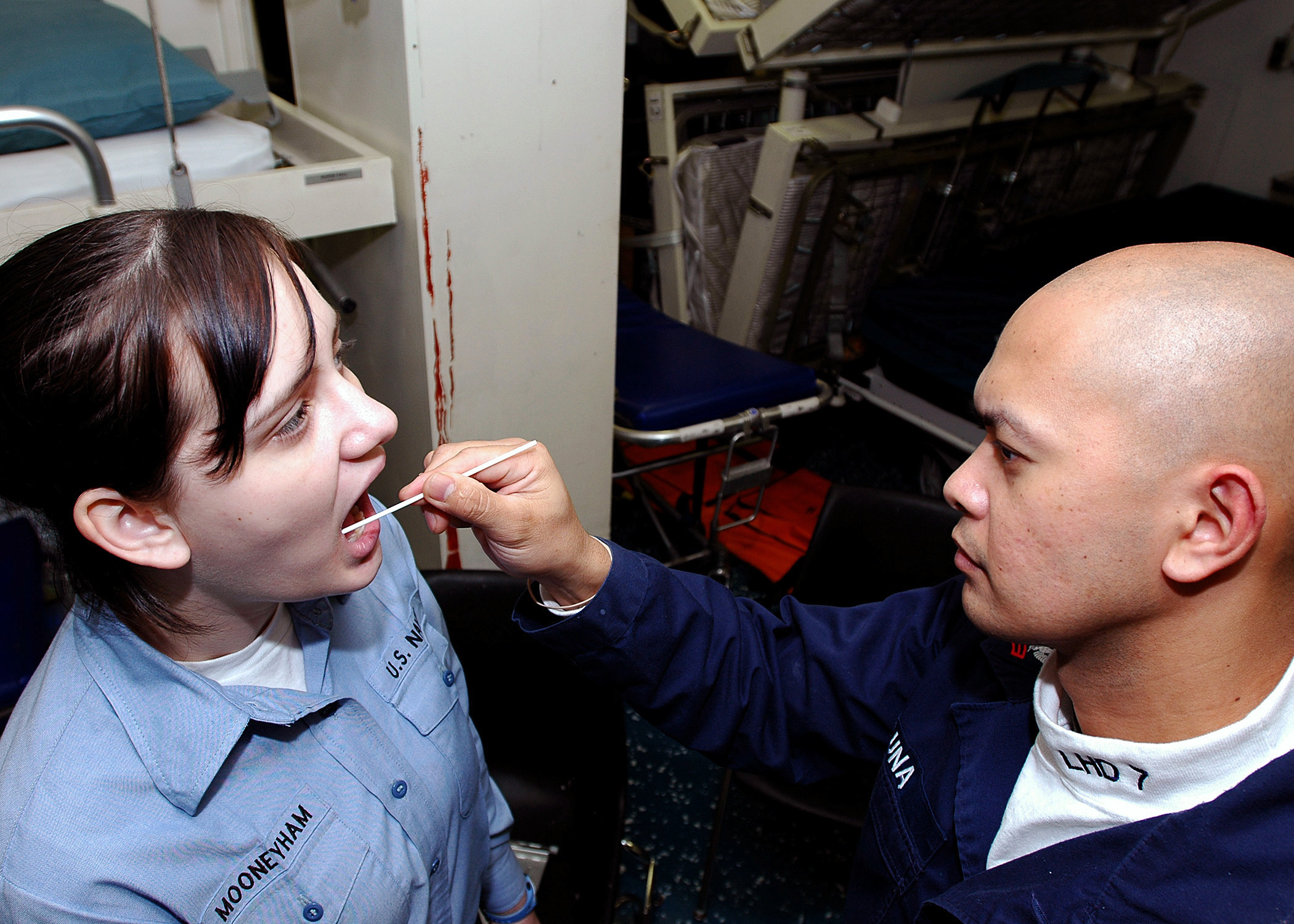 On June 3, 2013, the Supreme Court handed down a widely-anticipated opinion
in Maryland v. King. In this case, the defendant’s DNA was
collected by the state after an arrest for first-degree assault. Though he pled to a lesser misdemeanor charge,
King’s DNA was found to be a match for an unsolved 2003 rape for which he was
eventually convicted. The Court
addressed the following issue: “whether the Fourth Amendment prohibits the collection and analysis of a DNA sample from persons arrested, but not yet convicted, on felony charges.” Justice Kennedy, writing for the Court, did
not examine the issue in isolation, but considered it in light of Maryland’s DNA Collection Act, which contained various protections for the accused. Specifically, DNA could only be
collected if the individual was charged with a violent crime, could not be
recorded or stored until after the individual was arraigned, and samples would
be destroyed if the criminal action did not result in a conviction; further,
the DNA could not be used for any purpose other than identification.
On June 3, 2013, the Supreme Court handed down a widely-anticipated opinion
in Maryland v. King. In this case, the defendant’s DNA was
collected by the state after an arrest for first-degree assault. Though he pled to a lesser misdemeanor charge,
King’s DNA was found to be a match for an unsolved 2003 rape for which he was
eventually convicted. The Court
addressed the following issue: “whether the Fourth Amendment prohibits the collection and analysis of a DNA sample from persons arrested, but not yet convicted, on felony charges.” Justice Kennedy, writing for the Court, did
not examine the issue in isolation, but considered it in light of Maryland’s DNA Collection Act, which contained various protections for the accused. Specifically, DNA could only be
collected if the individual was charged with a violent crime, could not be
recorded or stored until after the individual was arraigned, and samples would
be destroyed if the criminal action did not result in a conviction; further,
the DNA could not be used for any purpose other than identification.Friday, June 14, 2013
Jerry Lee Jenkins: Wrongfully Convicted, Never Gave Up

June 7, 2013 is a day Jerry Lee Jenkins will always
remember. It was the day he joined over
three hundred other men and women who were exonerated with the use of
post-conviction DNA testing. Mr. Jenkins
had been fighting to prove his innocence since he was wrongfully convicted in
1987 for the brutal rape of a young woman in Waldorf, Maryland. On the evening of February 6, 1986 the woman,
a real estate agent, was at a model home when a man came in, concealed his face
with a stocking and pulled a knife on her.
The man covered the woman’s face and proceeded to rape her. The woman was able to get a partial glance at
his face. The woman would later admit at
a photo lineup with Mr. Jenkins and to the jury that Mr. Jenkins looked like
the man who attacked her but she was not sure it was him. An expert from the FBI testified at trial that
Mr. Jenkins was within four percent of the population that could have
contributed to the biological material left at the crime, which is still a
large pool of possible offenders. Mr.
Jenkins was convicted regardless.
Friday, June 7, 2013
DNA Testing the Next Chapter - The Supreme Court's Ruling in Maryland v. King
 On June 3,
2013 the Supreme Court issued its 5-4 opinion in Maryland v. King, holding that when a suspect
is arrested with probable cause for a serious offense it is a reasonable search
for the officers to collect a DNA swab from the suspect. Writing for the
majority, Justice Kennedy analogized the DNA swab to fingerprinting and
photographing as legitimate and routine police booking procedures. The
case before the Court involved Mr. King who, in 2009, was arrested for first
and second-degree assault and had a DNA
sample taken as part of the routine booking procedures for serious offenses in
Maryland. Maryland law allows DNA samples to be taken
from arrestees charged with violent crimes, burglaries, and attempts to commit
either a violent crime or burglary. Md. Pub. Saf. Code Ann § 504(a)(3)(i)
(Lexis 2011). The DNA sample was matched to an unsolved rape case from
2003, and Mr. King was subsequently charged and convicted for the 2003
rape. Mr. King moved to suppress the DNA evidence as it violated his
Fourth Amendment rights, and the Maryland Court of Appeals agreed with Mr. King
finding that the DNA swab, in this context, was an unreasonable search.
The Supreme Court reversed the Maryland Court of Appeals’ decision.
On June 3,
2013 the Supreme Court issued its 5-4 opinion in Maryland v. King, holding that when a suspect
is arrested with probable cause for a serious offense it is a reasonable search
for the officers to collect a DNA swab from the suspect. Writing for the
majority, Justice Kennedy analogized the DNA swab to fingerprinting and
photographing as legitimate and routine police booking procedures. The
case before the Court involved Mr. King who, in 2009, was arrested for first
and second-degree assault and had a DNA
sample taken as part of the routine booking procedures for serious offenses in
Maryland. Maryland law allows DNA samples to be taken
from arrestees charged with violent crimes, burglaries, and attempts to commit
either a violent crime or burglary. Md. Pub. Saf. Code Ann § 504(a)(3)(i)
(Lexis 2011). The DNA sample was matched to an unsolved rape case from
2003, and Mr. King was subsequently charged and convicted for the 2003
rape. Mr. King moved to suppress the DNA evidence as it violated his
Fourth Amendment rights, and the Maryland Court of Appeals agreed with Mr. King
finding that the DNA swab, in this context, was an unreasonable search.
The Supreme Court reversed the Maryland Court of Appeals’ decision.
Subscribe to:
Posts (Atom)